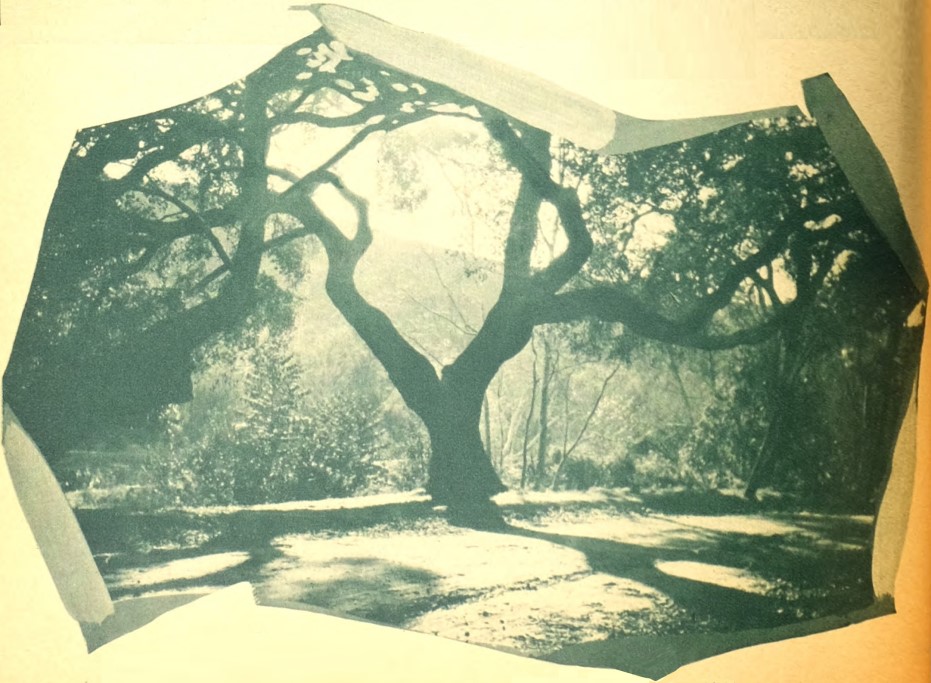
"Down at home the rumbling of cars and wagons, the noisy scramble of men, the infinite discordances of civilization leave little room for thoughts that are higher than a sky-scraper or bigger than an income. Up here one sits and walks with Nature. He is part of her quiet and unhurried life, and sees her vast order go serenely on. The life history of a decaying tree is appealing in its slow tragedy; the crumbling rocks that time has chiseled to strange forms have almost a human interest."
Category: El Aliso tree
TANGIBLE MEMORIES: Californians and their Gardens, 1800-1950, by Judith M. Taylor and Harry Morton Butterfield
STRANGE PLANTS of THE SEAS: Illustrationes algarum in itinere, by Aleksandr Postels and Franz Ruprecht
"Leaving out of consideration the more exact methods of classification employed by algologists, algae may be divided into their four great botanical sub-classes on the basis of color, although this method of identification is not always correct. The blue-green or purple sea-weeds are all small — mostly microscopic — with two genera consisting of fine, hair-like, filamentous plants. The grass-green algae are among the most widely diffused of plant forms, being found everywhere between tide marks, floating on the surface of the deep sea, covering damp earth, walls, palings and tree trunks, sticking to the surface of leaves in damp forests and existing in every brook, river, ditch, pond or casual pool of rain water. Many are microscopic in size, but others are quite large, resembling grass, leaves, mushrooms and a multitude of other common land plants."


