"Lewis Macadams points toward the ancient smokestack of the Edison Electric Plant. Thick grids of trackage, classification and storage yards, lumber and produce depots, breweries, foundries, and slum housing. Sixty thousand blue-collar workers and their families were crowded in the stretch of downtown between the river and Alameda Street from Elysian Park to Washington Boulevard."
Category: Jean Louis Vignes
SOUTHERN VINEYARDS: The Economic Significance of the Wine Industry in the Development of Los Angeles, 1831-1870, by Cleve E. Kindall
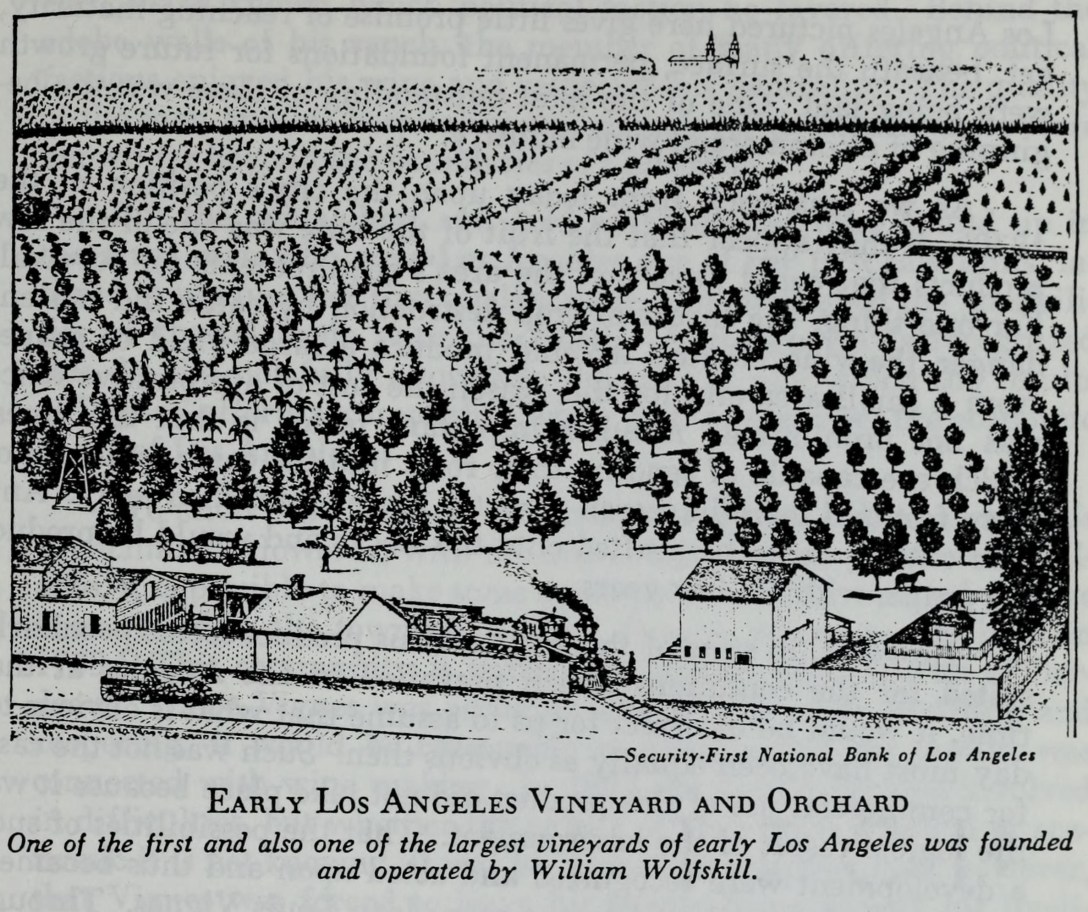
"These were the economic conditions that Jean Vignes faced during his early days in Los Angeles. His experience and background turned him away from any connection with the city’s only major business, cattle, and led him towards the vine. He was able to recognize the shortcomings of the local vineyards, and, at the same time, realize the possibilities that the area represented. The soil and climate, he knew, could support an industry and produce wines comparable to Europe’s best. He is quoted as declaring that the area was 'just the place to grow them [oranges and grape vines] to perfection.'"
LOS ANGELES WHEN IT WAS “THE CITY OF VINES,” By Mrs. A. S. C. Forbes
"In 1829 or 1830, Jean Luis Vignes, a native of Bordeaux, France, came to Los Angeles to make his home. He secured 104 acres of land facing the present Aliso Street and extending to the river, and that he planted a vineyard. He named his place 'El Aliso,' from the stately old alder tree that graced the lot and shaded his wine cellars. This tree has been called a sycamore, but as the Spanish word for alder is aliso, and the Spanish word for sycamore is sicomoro, it would seem that the tree was an alder."


